Owning property in Dubai offers Australian investors exceptional opportunities.
The numbers tell a powerful story.
According to a 2025 report, Dubai offers rental yields of 6.3% and 6.8% compared to Sydney’s 2.7% to 4.6%. Properties in areas like Palm Jumeirah, Downtown Dubai, and Dubai Marina have recorded annual growth of between 10% and 20% in recent years. The Australian dollar’s strength against the UAE dirham further boosts your buying power.
Here’s the foundation: Australians can purchase freehold properties across designated Dubai zones without restrictions. You own your apartment or villa completely as a non-resident investor.
This guide breaks down exactly how to buy Dubai property as an Australian investor. You’ll discover which areas deliver the highest returns, what documents you need at each stage, and how to sidestep the common mistakes that cost money or time.
🎧 Listen to this article in podcast style
Key Takeaways
- Australians can fully own freehold property in Dubai as non-resident investors, with popular areas including Palm Jumeirah, Downtown Dubai, and Dubai Marina.
- Buyers face upfront costs such as 4% Dubai Land Department registration fee, legal fee flat rate between AED 6,000 and AED 10,000 AED, a 10% deposit, and ongoing service charges from AED 10 per sq ft yearly.
- The process requires valid Australian passport, UAE visa for mortgages, proof of funds, Emirates ID for title deeds and official payment through approved banking channels.
- Golden Visa eligibility starts at a property value of AED 2 million and offers up to ten years’ residency plus the option to sponsor family members.
- All ownership transfers must be registered with the Dubai Land Department before setting up utilities or renting out your investment under UAE law.

Why Australian Investors Choose Dubai Property

Dubai’s tax-free environment makes property investment attractive for Australians.
The absence of capital gains tax, stamp duty, and rental income tax means you keep more from your returns. According to the Australian Bureau of Statistics, Australians collectively held more than A$4.3 trillion in overseas investments as of December 2024, with Dubai emerging as a clear frontrunner.
Rental returns in Dubai significantly outperform Australian cities. As of September 2025, the average rental yield for new contracts stood at 6.76 %, according to Engel & Völkers Dubai. Areas like Jumeirah Village Circle deliver yields approaching 8%, while premium locations such as Palm Jumeirah and Dubai Marina offer steady returns around 6% alongside strong capital appreciation.
Find out what your budget can secure in Dubai.
See which properties match your investment goals.
The Australian dollar’s favourable position against the AED directs gives Aussies greater purchasing power. The dirham is pegged to the US dollar, providing stability that shields you from currency fluctuations common in other markets. Dubai Property Playground notes this exchange rate advantage allows Australians to acquire larger or more premium properties than they might afford at comparable prices elsewhere.
Infrastructure development drives long-term valuations. According to Henley & Partners, the UAE is expected to attract 9,800 millionaires in 2025, more than any other country worldwide. The Dubai Land Department reported 180,900 property transactions in 2024, totalling AED 522.1 billion. This represents a 36% increase in transaction volume and a 27% rise in value compared to 2023, with luxury segments seeing a 45% increase in transactions.
Recent growth patterns support investment confidence. The first half of 2025 attracted approximately 94,700 investors to Dubai, marking a significant 26% increase compared to the same period in 2024. Dubai’s economy grew by 3.2%, reaching AED 231 billion in 2024, with continued momentum expected throughout 2025.
Can Australians Buy Property in Dubai? (Ownership Explained)

Yes, Australians can purchase property in Dubai without nationality-based restrictions.
The emirate allows foreigners, including Australians, to own real estate in designated freehold zones. These areas include Palm Jumeirah, Downtown Dubai, Dubai Marina, Business Bay, Jumeirah Lakes Towers, and Arabian Ranches.
Ownership rights cover apartments, villas, commercial spaces and off-plan properties sold by developers. Your investment means you hold a 100% title deed registered under your own name with the Dubai Land Department. This grants complete ownership of both the property and the land beneath it.
You can secure loans from UAE banks as a non-resident investor. Banks such as Emirates NBD, Mashreq Bank, and Dubai Islamic Bank offer mortgage options for Australians who meet basic requirements such as credit score checks and proof of funds. Financing typically covers up to 75% of the property value for ready properties.
A No Objection Certificate (NOC) from the developer is required during the transaction process. This standard document confirms the developer has no objections to the sale and that all developer fees are settled. All ownership transfers are managed through official land registration at the Dubai Land Department.
Foreigners can buy freehold property in designated areas of Dubai, no matter your nationality, confirms the Dubai Land Department.
This legal freedom gives Australian investors access to unique tax policies not available in many global markets. As of 2025, there are no property taxes, capital gains taxes, or rental income taxes in Dubai. This tax structure allows you to maximise returns on both rental income and property appreciation.
Freehold vs Leasehold: What Australians Need to Know

Understanding the difference between freehold and leasehold properties is crucial for Aussies considering an investment or a second home.
Freehold ownership grants you absolute ownership of both the property and the land it sits on for an unlimited period. You can sell, lease, renovate within community guidelines, and pass the property to heirs as you wish.
Leasehold gives you the right to occupy and use a property for a specific period, typically between 30 to 99 years. While you can live in, rent out, or sell the remaining lease term to others, you don’t own the underlying land, and your rights expire when the lease ends.
Market data reveals a significant pricing gap. A family from Boston who purchased a freehold apartment in Dubai Marina saw 27% appreciation over three years, while a similar leasehold property in the same building gained only 11%. As the leasehold term gradually shortens, its resale value diminishes.
Service charges vary between ownership types. According to 2025 data, freehold properties typically range from AED 12-25 per square foot annually. In luxury developments like One Palm by Omniyat, these fees can reach AED 35+ per square foot to maintain exceptional facilities including private beaches and concierge services.
| Feature | Freehold Property | Leasehold Property |
|---|---|---|
| Ownership Rights | Full ownership of property and land. Owner’s name registered at Dubai Land Department. | Right to use property for a fixed term, commonly 99 years, without owning the land. Land remains with landlord or developer. |
| Eligibility for Aussies | Foreigners, including Australians, can buy in designated freehold zones like Dubai Marina and Downtown Dubai. | Available to non-UAE nationals, but mostly in limited locations, with extra checks on contract terms. |
| Security & Flexibility | Provides greater security. Buyer can sell, rent, or pass on to heirs without restriction. | May have restrictions on resale or subletting. End-of-term provisions must be clear in contract. |
| Typical Cost | Tends to be higher due to full ownership status and prime location access. | Usually less expensive. Lower initial outlay but potential for extra legal and renewal fees. |
| Legal Process | Straightforward process. Dubai Land Department registers title. Recognised by banks for mortgages. | Involves more legal scrutiny. Essential to clarify all end-of-term and renewal rights. |
| Long-term Value | Holds better long-term value. Freehold titles are attractive options for future resale or leasing. | End-of-term uncertainty affects resale value. May limit future investment returns. |
| Example Neighbourhoods | Palm Jumeirah, Jumeirah Lakes Towers, Business Bay, Arabian Ranches. | Older areas or properties outside main freehold districts, often with local landlords. |
Top Dubai Neighbourhoods Popular with Australians

Australian investors favour specific Dubai districts for strong returns and lifestyle appeal.
These areas offer high rental yields, modern infrastructure, and close links to business centres.
Premium Waterfront Communities
Dubai Marina stands out with its waterfront views, modern high-rises, and lively atmosphere. As of 2025, property prices average AED 1,600 to AED 2,300 per square foot depending on the building’s age and location. A one-bedroom apartment typically costs between AED 1.2 million and AED 1.9 million. Rental yields average 6% to 8%, particularly for studios and one-bedroom units which see high demand for both long-term and short-term rentals. The Marina features over 200 buildings and covers 4.9 square kilometres parallel to Dubai’s coastline.
Palm Jumeirah attracts buyers seeking beachfront villas and apartments on the man-made island. Prime villas can surpass AED 73 million, while apartments deliver yields of around 6-8% according to 2025 data. Studios in this area generate nearly 9% returns, making them attractive for investors focused on rental income. The exclusive address and waterfront lifestyle support steady price growth in the premium sector.
Curious what Australian buyers are securing right now?
Get a personalised Dubai property shortlist in minutes.
Central Business Districts
Downtown Dubai draws investors with icons like the Burj Khalifa, The Dubai Mall, and regular cultural events. As of early 2025, the average price per square foot is approximately AED 2,200 to 2,800, depending on the tower and view. Studio apartments deliver solid rental yields over 8% in this area. Properties here attract tenants quickly because of tourism and business appeal. A standard one-bedroom apartment ranges between AED 1.6 million to AED 2.4 million.
Business Bay offers a mix of office towers, modern apartments, and waterfront parks near Downtown Dubai’s core. Studios and 1-bedroom apartments both deliver yields above 6% according to 2025 rental data. The area’s central location near Dubai International Financial Centre makes it attractive to professionals working nearby, ensuring rental returns stay strong.
Affordable Family Communities
Jumeirah Village Circle (JVC) appeals with affordable prices compared to central areas. As of August 2025, JVC offers average rental yields of 7.87% for studio flats. One-bedroom flats yield 7.04%, two-bedroom apartments yield 6.78%, and three-bedroom flats yield approximately 7.21%. The average sale price for an apartment in JVC is around $328,561 (AED 1.2 million) in 2025, making it a relatively affordable investment that still offers community facilities and new developments.
Arabian Ranches provides suburban living with townhouses starting from AED 2.5 million, while standalone villas range from AED 3.5 million to over AED 6 million. Price per square foot typically ranges from AED 1,100 to 1,600. Rental yields are between 3.5% and 5%, appealing more to investors focused on long-term stability and capital appreciation rather than short-term cash flow. The area features top-rated schools, the Arabian Ranches Golf Club, and strong appeal to long-term family tenants.
Each district benefits from ongoing infrastructure upgrades which drive up property values over time. Tracking these trends helps you make informed decisions about your next move in the Dubai real estate market.
Costs & Fees Involved in Buying Dubai Property

Purchasing real estate in Dubai as an Australian involves several direct and ongoing costs you need to budget for from the start.
Understanding these expenses helps you plan your investment accurately and avoid surprises during the transaction process.
| Cost / Fee | Details | Typical Rate / Amount | Example Entities or Tools |
|---|---|---|---|
| Legal Fees | Paid for legal advice, contract review, and due diligence checks. Engaging a property lawyer is strongly recommended for extra protection during transactions. | 2% – 4% of property price | Solicitors, conveyancers |
| Dubai Land Department Registration Fee | Charged by Dubai Land Department (DLD) for transferring property title to your name. | 4% of property price | Dubai Land Department (DLD), Property Finder |
| Deposit | Required to secure the sale at the offer stage; deposited into an ESCROW account for buyer safety. | 10% of property price | ESCROW accounts, banks |
| Agent Commission | Paid to the real estate agent handling your purchase. Commissions are negotiable and cover their service and market expertise. | 2% of property price (usually) | Real estate agents, agencies |
| Service Charges | Covers building maintenance, cleaning, landscaping, and amenities like pools or gyms. Paid annually and varies by building or area. | From AED 10 to AED 50 per sq ft per year | Property management firms, building committees |
| Property Management Fees | Optional, if you choose a firm to manage the property for you, including tenant search and maintenance coordination. | 5% – 10% of annual rental income | Property management companies |
| Mortgage Fees (if applicable) | Bank charges, arrangement fees, property valuation costs. Required if using a mortgage for the purchase. | Usually 1% of loan amount, plus AED 2,500 – 5,000 valuation fee | Banks, mortgage brokers |
| Insurance | Protection for property against fire, theft, and other risks. Annual premium varies by property and provider. | From AED 1,000 per year | Insurance companies |
| Utilities Connection | Setting up water, electricity, gas, and internet in your name. Mandatory before occupying or renting out the property. | From AED 2,000 setup fees (varies by provider) | DEWA (Dubai Electricity and Water Authority), Du, Etisalat |
| Taxes | No annual property taxes in Dubai, but buyers may face charges in their home country. Tax planning is wise before investing. | Varies by Australian tax residency status | Australian Taxation Office (ATO), tax advisors |
| Other Transaction Costs | Courier charges, admin costs, document attestation. | From AED 500 – AED 2,000 | Notaries, attestation services |
Service charges, insurance, and property management fees are ongoing expenses. ESCROW account use adds an extra layer of security to your investment and is required by some developers. Most transactions start with a 10% deposit paid at the Memorandum of Understanding stage.
Professional due diligence helps you avoid risks and hidden fees. Working with established agents and using tools like Property Finder ensures transparency throughout the buying process. Factor in all these costs when calculating your total investment and expected returns.
Eligibility Requirements for Australians
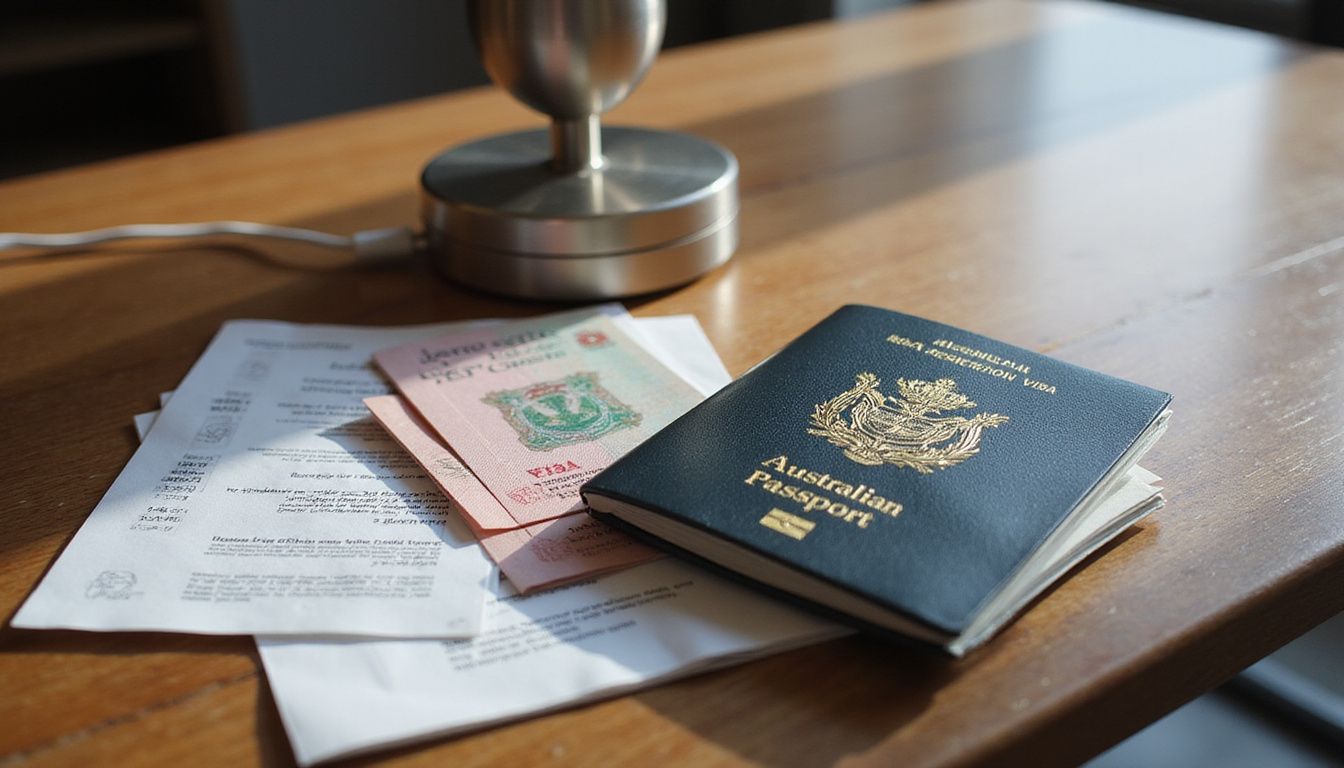
The Dubai Land Department sets out specific requirements for all non-resident investors, including Australians.
Meeting these criteria ensures a smooth transaction process and legal compliance.
- You must hold a valid Australian passport, as this acts as your main form of ID during the buying process. Your passport must have at least 6 months’ validity remaining.
- A UAE residence visa can be needed, especially if you want access to certain mortgage options with local banks. Banks often require proof of legal entry into the country before approving mortgages.
- You need financial proof showing enough funds for the down payment and related fees. Bank statements or loan approvals count here. For mortgages, banks typically require proof that you’ve paid a minimum deposit amount.
- Australians must pass due diligence and legal background checks to confirm eligibility under Dubai real estate laws. This includes verification that you have no criminal record or dangerous infectious diseases.
- Obtaining an Emirates ID is required before finalising any title deeds or registering your Dubai property investment. This ID card serves as your official identification within the UAE.
- An NOC (No Objection Certificate) from the developer is essential if you buy off-plan properties in areas like Downtown Dubai or Palm Jumeirah. This certificate confirms the developer has no objections to the sale.
- Meeting the minimum property value set for Golden Visa eligibility helps you apply for long-term residency. As of 2025, this starts at AED 2 million in value and grants renewable 10-year residency.
- All buyers sign official sale contracts with their real estate agent present. These are later registered with the Dubai Land Department for legal protection.
- Australians can use only official currency rates and approved banking channels while arranging payments. Exchange rate rules ensure transparency during transfers involving Australian dollars and UAE dirhams.
- For properties purchased through developer or bank mortgage, you must provide a statement of account from the developer or a Bank NOC to proceed with the residence visa application if applying for Golden Visa status.
Golden Visa Benefits for Property Investors

The Golden Visa grants long-term residency for property buyers who meet set criteria.
This visa offers up to 10 years of renewable residency for investors purchasing property worth at least AED 2 million (approximately A$840,000) in designated freehold areas like Palm Jumeirah or Downtown Dubai. According to Knight Frank and Dubai Land Department data, property-linked Golden Visa applications surged over 30% year-on-year in early 2025.
Your investment can include ready residential properties, off-plan developments once 50% construction is complete, or multiple properties that total AED 2 million or more under your name. The total property value, not just equity, must reach this threshold. Properties purchased through mortgages qualify if you provide a No Objection Certificate from the financing bank.
Golden Visa holders can sponsor their family members, bringing loved ones together in one place. Eligible dependents include your spouse, children with no age limit, and even domestic workers such as nannies or drivers. This makes it ideal for family relocation.
Take the guesswork out of Dubai investing.
Answer a few quick questions for a tailored match.
The visa boosts business mobility across the UAE, allowing smoother access to opportunities within Business Bay and other key centres. You gain full access to the UAE with no minimum stay requirement, which means you can maintain the visa even while living primarily in Australia or travelling frequently.
Tax advantages add significant value. Golden Visa holders benefit from zero personal income tax, no capital gains tax, and tax-free rental income. This tax-efficient environment maximises your investment returns and provides long-term financial planning benefits.
Processing typically takes 2-4 weeks depending on document review. Major developers such as Emaar, Sobha, Damac, and Nakheel offer Golden Visa support desks within their customer centres to assist with the application process. The visa is automatically renewable after its 10-year validity, provided you continue to meet the eligibility criteria.
12 Essential Steps to Buy Property in Dubai as an Australian
Step 1: Prepare Your Valid Passport and UAE Visa

Every Australian buying property in Dubai must present a valid passport.
Your passport must have at least 6 months’ validity remaining from the date of your property transaction. Without this, your transaction will not proceed at all. The Dubai Land Department uses your passport details for every step of registration and ownership transfer.
A UAE visa plays an important role if you plan to finance your purchase with a local bank loan. Banks such as Emirates NBD, Mashreq Bank, and Dubai Islamic Bank often require non-resident investors to show proof of legal entry into the country before approving mortgages. The entry stamp in your passport serves as this proof.
Applying for Emirates ID means presenting both your valid visa and stamped passport page proving arrival in the UAE. This ID card is mandatory before you can finalise title deeds or complete property registration. Most off-plan properties or established areas like Palm Jumeirah, Downtown Dubai, or Dubai Marina involve this documentation as standard practice.
Your passport name must match exactly with all other documents, including title deeds and Emirates ID. Even small errors, such as middle name variations or spelling differences, can stall progress during mortgage registration or title insurance checks.
Keep certified copies of your passport with you during the entire purchase process. You’ll need these copies for legal checks, bank applications, and Dubai Land Department submissions. Clear identity papers let you move through each step quickly without extra stress over simple paperwork mistakes.
Step 2: Open a UAE Bank Account
Australian investors need a UAE bank account to buy property in Dubai.
Local banks like Emirates NBD, Mashreq Bank, and Dubai Islamic Bank accept expats as clients. Australian buyers must show a valid passport and an active UAE visa for the application. Some banks might also ask for proof of address and income documents, so keep those handy.
Your local account helps you transfer money securely when buying property in areas like Palm Jumeirah or Business Bay. Many developers require all payments through a UAE bank, which makes your purchase smooth and transparent. This requirement ensures proper tracking of funds and compliance with UAE financial regulations.
The same applies if you plan on applying for a mortgage. Local lenders want funds to come from within the country before they approve home loans or process mortgage registration fees. Banks typically finance up to 75% of the property value for ready properties when you have a UAE account and meet their lending criteria.
Opening an account takes around 1-2 weeks depending on the bank. You’ll need to visit a branch in person to complete the application. Bring your passport, UAE visa, proof of address (which can be a hotel booking or tenancy agreement), and recent bank statements from your Australian account showing your financial standing.
Having this account can speed up deals with agents working in hotspots such as Downtown Dubai or Dubai Marina. Once your account is active, you’re ready to begin searching and comparing properties that match your investment goals.
Step 3: Search and Compare Dubai Properties

Finding the right Dubai property requires strategic research and careful comparison.
Your focus should match your goals as an investor or buyer.
- Look at different property types, such as residential, commercial, and off-plan offerings. Many Australians explore options in areas like Dubai Marina, where studios average AED 1,174,000, and Palm Jumeirah, where properties range from affordable apartments to ultra-luxury villas exceeding AED 73 million.
- Use both online portals and local agents to view listings. Visiting properties in person confirms details you find online. Platforms like Property Finder and Bayut provide up-to-date listings and pricing data.
- Check location, transport links, schools, shops, and amenities nearby. Downtown Dubai and Business Bay attract many expats due to their convenience and proximity to business districts.
- Review current market trends using data from verified sources. According to ValuStrat, property prices in Dubai could increase by another 10% before the end of 2025, making timing important for your investment.
- Compare prices per square metre across several districts before making an offer. As of 2025, Dubai Marina properties average AED 1,600-2,300 per square foot, while Downtown Dubai ranges from AED 2,200-2,800 per square foot depending on the tower and view.
- Analyse potential return on investment (ROI). JVC delivers excellent rental yields across property types, with most units generating over 7% returns. Dubai Marina offers yields of 6-8%, particularly for studios and one-bedroom apartments.
- Verify green building standards of developments if sustainability matters to you. Many new projects in Dubai, aligned with the Net-Zero 2050 commitment, focus on eco-friendly features, energy-efficient designs, EV charging stations, and smart lighting systems.
- Collect recent sales data and request a formal appraisal from approved property valuers before deciding. This ensures you pay fair market value and can secure financing if needed.
- Factor in all ownership costs. Include the 4% registration fee, mortgage fees, service charges averaging AED 12-25 per square foot annually, insurance premiums, and maintenance expenses when comparing properties.
- Shortlist properties with secure legal status. Off-plan properties must be registered with the Dubai Land Department before transfer can occur. Verify that the developer is approved and that the project has proper permits.
Step 4: Choose a Trusted Real Estate Agent
Selecting a reliable real estate agent shapes your entire experience of buying property in Dubai.
Many Australian investors look for professionals who know the Dubai real estate market inside out, especially areas like Palm Jumeirah, Business Bay, and Downtown Dubai. Choose an agent licensed with local authorities and experienced in helping non-resident investors from Australia.
Look for agents who can demonstrate recent success with Australian clients. They should understand the specific tax implications, currency considerations, and legal requirements that apply to Aussie buyers. Ask for references from other Australian investors they’ve worked with.
A trusted adviser does more than open doors to viewings. They protect your interests during negotiation, check that urgent legal matters get handled quickly, and ensure all transactions comply with Dubai Land Department regulations. Reputable companies only work with developers using ESCROW accounts, which adds security for off-plan properties.
Ready to turn this guide into your own action plan?
We’ll match you with projects that fit your goals.
Many Australians warn against pushy or overly aggressive agents. A quality professional provides honest guidance about market conditions, pricing trends, and realistic rental yields. They won’t pressure you into quick decisions or hide potential drawbacks of a property or location.
Your agent should explain all costs clearly upfront. This includes the standard 2% agent commission, the 4% Dubai Land Department registration fee, service charges that can range from AED 10-50 per square foot annually, and ongoing property management options.
Choosing wisely protects you from costly mistakes in both new developments and established neighbourhoods like Dubai Marina. This makes it easier to compare properties safely before signing any agreements and ensures you have knowledgeable support throughout the entire purchase process.
Step 5: Property Viewings and Inspections

Visiting properties in person is essential for Australian investors.
Walking through each property lets you spot issues that online listings may hide. You can check spaces, natural light, views, and the actual feel of the home before making a decision about your property investment in Dubai.
Schedule viewings at different times of day. Visit once during morning hours and again in the evening. This reveals traffic patterns, noise levels, and how sunlight enters the apartment. You’ll also see how busy the building gets at peak times.
Inspections are vital for due diligence. Always look at structural condition, checking walls, ceilings, and floors for cracks or water damage. Test mechanical systems like air conditioning, plumbing, and electrical fixtures. In Dubai’s climate, air conditioning quality is especially important.
Check legal compliance with local rules set by the Dubai Land Department. Verify that the property has proper completion certificates, especially for newly finished developments. For off-plan properties, confirm the construction progress matches what the developer promised.
Bring a professional inspector if possible. Property inspection services in Dubai cost around AED 1,000-2,000 but can save you thousands by identifying problems early. They’ll check for hidden issues like poor waterproofing, faulty electrical work, or substandard building materials.
Examine shared facilities and common areas. Test the lifts, check the gym and pool if included, and assess the overall maintenance of the building. Well-maintained facilities indicate good property management, which affects your service charges and long-term property value.
Review the building’s community rules and regulations. Some developments have restrictions on short-term rentals, renovation permissions, or pet ownership that could affect your investment plans.
Missed problems may later mean high repair costs or legal trouble. For non-resident investors buying property in Dubai, setting up thorough inspections helps avoid costly surprises and makes a safer choice possible, especially with properties in busy areas such as Business Bay or emerging developments.
Step 6: Legal Checks and Due Diligence

Legal checks protect your investment in Dubai property.
Due diligence prevents costly mistakes and legal disputes down the line.
- Hire a solicitor who specialises in Dubai real estate law. Proper legal representation ensures you understand each contract detail before signing. Legal fees typically range from 2-4% of the property price.
- Review the property title with care. This confirms there are no pending disputes, outstanding debts, or mortgages attached to the property. The title deed must show clean ownership history.
- Order a detailed property inspection before any agreement. Check if maintenance, utilities, and build quality meet your standards. Professional inspections typically cost AED 1,000-2,000.
- Ask your agent for proof of developer approval if buying off-plan properties. Make sure the builder has fulfilled all requirements set by the Dubai Land Department. Check that the project has proper permits and that at least 50% construction is complete for Golden Visa eligibility.
- Confirm that the seller is authorised to sell the property. Cross-check their identity using official documents like passports or Emirates IDs. Verify their name matches exactly with the title deed records.
- Request recent service charge statements for apartments in towers around areas like Dubai Marina and Business Bay. Get written evidence that all fees are up-to-date. Outstanding service charges can become your responsibility after purchase.
- Assess all possible restrictions for non-resident investors buying freehold versus leasehold properties in zones such as Palm Jumeirah or Downtown Dubai. Understand what rights come with each ownership type.
- Seek professional advice to clarify transfer fees, mortgage registration fees, or outstanding bills tied to your chosen property investment in Dubai. The standard Dubai Land Department registration fee is 4% of the property price.
- Ensure all agreements are documented through a Memorandum of Understanding (MOU). Keep copies for every step during legal checks and due diligence.
- Verify ESCROW account usage for off-plan properties. This protects your deposit until property handover and ensures compliance with UAE regulations.
Step 7: Negotiation and Signing the MOU

Negotiation starts once you’ve completed your due diligence and decided on a property.
Australian investors first make an offer to the seller or developer. This starts a negotiation phase, where both sides discuss price, payment schedule, and any special terms for buying property in Dubai. You might negotiate extras too, like furniture packages, minor repairs before handover, or flexible payment terms.
The Dubai real estate market often expects buyers to be ready with facts. Research similar properties in Palm Jumeirah, Business Bay, Dubai Marina, or Downtown Dubai. This data helps you justify your offer with current market prices. As of 2025, average prices per square foot range from AED 1,100 in Arabian Ranches to AED 2,800 in Downtown Dubai’s premium towers.
Once everyone agrees on terms, both parties sign a Memorandum of Understanding (MOU). This legally binding document lists the sale price, deposit amount (usually 10%), and all agreed conditions for the deal. The MOU includes the property details, payment schedule, completion date, and any conditions precedent such as mortgage approval or satisfactory final inspection.
As an Australian buyer and non-resident investor in Dubai property, you pay your deposit into ESCROW at this stage. The deposit stays secure until final transfer, protecting both parties. Your funds remain held by a regulated third party until all conditions are met and ownership formally transfers.
Both buyer and seller are now legally bound by what’s written in the MOU. Changing your mind after signing can mean losing your deposit or facing other penalties under UAE law. The seller also faces penalties if they fail to complete the sale as agreed.
The Dubai Land Department sets clear rules for each transaction. Whether you’re looking at off-plan properties or something complete in areas popular among Australians like Palm Jumeirah and Dubai Marina, the MOU protects all buyers from risk while making sure everyone honours their side of the agreement. Keep your signed MOU safe as you’ll need it for the next steps in the purchase process.
Step 8: Mortgage Arrangements (If Needed)

Dubai banks offer loans to expatriates, including non-resident investors from Australia.
With the MOU signed, arranging your mortgage becomes the next priority if you’re not paying cash. Banks like Emirates NBD, Mashreq Bank, and Dubai Islamic Bank will often finance up to 75% of the property value for ready villas or apartments in areas like Palm Jumeirah, Dubai Marina, Downtown Dubai, or Business Bay.
Banks usually require a UAE residence visa for approval of most mortgages on buying property in Dubai. They also ask for proof of income, employment contracts, and bank statements showing your financial position. Your credit history from Australia may be checked as part of their assessment process.
Expect to pay mortgage-related fees. Banks typically charge around 1% of the loan amount as an arrangement fee, plus AED 2,500-5,000 for property valuation. You’ll also pay mortgage registration fees to the Dubai Land Department during this step, which is separate from the 4% transfer fee.
See how far your AUD goes in Dubai’s booming market.
Get a personalised property match based on your budget.
The approval process usually takes 2-4 weeks depending on the bank and complexity of your application. Banks will conduct their own property valuation to confirm the market value matches or exceeds the purchase price. They want assurance that the property provides adequate security for the loan.
Different banks may have specific rules depending on whether you invest in off-plan properties or completed apartments within the current Dubai real estate market. Off-plan mortgages may have different terms or require additional guarantees from the developer. Check carefully with your lender about all conditions before moving forward.
Your mortgage broker can help navigate multiple banks and find competitive rates. Brokers typically don’t charge buyers, as they receive commission from the banks instead. They can streamline the application process and increase your chances of approval by matching you with suitable lenders.
Step 9: Sign the Sales and Purchase Agreement (SPA)

The Sales and Purchase Agreement finalises your property deal in Dubai.
This contract lists all legal and financial duties for both buyer and seller. The document spells out payment terms, completion dates, property handover rules, penalties for defaults and details about maintenance fees or mortgage registration fees if they apply.
Your solicitor should review the SPA thoroughly before you sign. The agreement covers critical details including the exact property specifications, fixtures and fittings included, any defects that need fixing, service charge obligations, and your rights as the new owner. For Australian investors, ensuring the English translation is accurate and matches any Arabic version is essential.
The SPA is legally binding across every area of Dubai’s property market including areas like Palm Jumeirah, Business Bay and Downtown Dubai. After paying your 10% deposit at the MOU stage, you must pay off any remaining balance upon signing this contract or according to the agreed payment schedule.
Both parties sign the SPA in the presence of witnesses and often at the developer’s office or your lawyer’s office. The document must include the Dubai Land Department property registration number, both parties’ Emirates IDs or passport details, and proof that all previous service charges and utility bills are settled.
Without a signed SPA, buyers cannot register their property with the Dubai Land Department. This stops your name from going on official records as owner. The SPA serves as your primary proof of purchase and forms the basis for the title deed transfer that follows.
Always double-check each clause before signing so nothing catches you off guard after buying property in Dubai as an Australian investor or non-resident buyer. Pay special attention to completion dates, penalty clauses for delays, procedures for property handover, and your obligations regarding ongoing costs like service charges.
Step 10: Register the Property with the Dubai Land Department

All property transfers in the Dubai real estate market must go through the Dubai Land Department.
This office manages official registration and ensures each sale meets strict legal requirements. You can visit the DLD Cube Center located in Business Bay or, for convenience, some developers offer in-house services at their offices.
You must pay the required registration fees at this stage, which come to 4% of your property’s purchase price. For example, if you buy an apartment in Business Bay for AED 2 million, expect to pay AED 80,000 as your fee. This fee is mandatory and non-negotiable under UAE law.
Bring all required documents to the registration appointment: your signed Sales and Purchase Agreement, passport, Emirates ID, NOC from the developer (if applicable), proof of payment, and mortgage documents if you financed the purchase. Your lawyer or agent typically coordinates this appointment and ensures all paperwork is complete.
Without DLD registration, ownership cannot legally transfer. Your name will not appear on public records until this step is complete. The registration process creates an immutable record in the Dubai Land Department’s system, protecting your ownership rights.
The Land Department issues an official title deed once all documents check out and payments clear. The new title deed lists you as the legal owner under United Arab Emirates law. This applies whether you choose off-plan properties in Palm Jumeirah or a completed unit in Dubai Marina or Downtown Dubai.
Electronic systems at the DLD help speed up registrations compared to past years when buyers queued for hours. The entire process now typically takes a few hours on the registration day itself, though scheduling the appointment may take 1-2 weeks depending on availability.
Some banks offer mortgage registration services right at their branches, making it easier for Australians using home loans from UAE banks to complete everything smoothly and quickly after signing their Sales and Purchase Agreement (SPA). This marks your transition from buyer to full owner within one of Dubai’s most dynamic neighbourhoods.
Step 11: Pay All Fees and Finalise Ownership Transfer

After you register your new property with the Dubai Land Department, settling all fees completes the official ownership transfer.
Each payment ensures legal compliance, so nothing should be missed in this stage.
- Settle all legal, registration, and transfer fees right away to avoid delays with your Dubai property purchase. The 4% Dubai Land Department fee must be paid before title deed issuance.
- Pay legal fees between 2% and 4% of the property price directly to your chosen conveyancer or solicitor. Get a detailed invoice showing exactly what services these fees cover.
- Cover mortgage registration fees at the Dubai Land Department if you arranged a home loan for your investment. This typically costs 0.25% of the loan amount plus AED 290 for registration.
- Transfer costs should be paid in full before finalising ownership. Check receipts carefully for accuracy and keep copies of all payment confirmations in your records.
- Pay any service charges or maintenance fees linked to off-plan properties or completed homes in places like Palm Jumeirah or Dubai Marina. Confirm with the developer or building management that all charges are current.
- Settle taxes and insurance premiums now. While Dubai has no property tax, you’ll need building insurance and may face tax obligations in Australia. Holding off may create issues during the property handover process.
- Submit payment confirmations and paperwork quickly to the Dubai Land Department. Delays could put your property investment in Dubai at risk or postpone your move-in date.
- Wait for confirmation from the Dubai Land Department that shows successful ownership transfer into your name. This usually arrives within a few days of completing all payments.
- Collect updated title deeds and keep them safe with other key documents related to buying property in Dubai. Store both physical and digital copies in secure locations.
- Verify that all utilities and local services are ready to activate once ownership is officially recorded under your name. Contact DEWA to schedule connection appointments.

Wondering which Dubai areas deliver the best returns?
Get a customised list backed by real market data.
Step 12: Set Up Utilities and Local Services

Setting up utilities is vital before moving in or renting out your Dubai property.
Service providers need proof of ownership, so have your title deed and Emirates ID ready.
- Apply for electricity and water through the Dubai Electricity and Water Authority (DEWA) as soon as you complete the property transfer. Connection fees typically start from AED 2,000. Book your appointment online or visit a DEWA customer centre.
- Internet, phone and TV connections can be arranged with Etisalat or du, depending on what is available in your building. Most buildings have exclusive agreements with one provider, so check with your building management first.
- Activate air conditioning accounts if required. Some off-plan properties in Dubai Marina or Downtown Dubai use district cooling companies such as Empower or Tabreed. Annual costs vary based on your apartment size and usage.
- Register for gas supply if needed, especially in communities with piped gas like Palm Jumeirah or Business Bay. Not all buildings have gas connections, so verify this during your property inspection.
- Expect to pay connection fees. Typical DEWA setup costs start from AED 2,000, while telecom registration can vary by provider and package, usually ranging from AED 500-1,000 for installation.
- Ongoing service charges apply to all properties, covering shared area cleaning, security, lifts and landscaping. These range between AED 10-30 per square foot annually depending on the neighbourhood, with luxury developments charging up to AED 35+ per square foot.
- Property management fees may apply if you hire a local agency to handle tenants or maintenance for investment properties. These typically cost 5-10% of annual rental income.
- Arrange rubbish collection services with your building manager or developer as this is not always automatic after purchase. Most buildings include this in service charges, but confirm to avoid issues.
- Secure parking space access cards if allocated in your development since not all towers include this by default. Some buildings charge additional fees for extra parking spaces or visitor permits.

Once utilities are live and local services are active, you can move forward with occupying the property or preparing it for tenants. This completion stage marks the final step in your journey to owning Dubai real estate as an Australian investor.
Common Mistakes Australians Should Avoid

Buying property in Dubai can be rewarding for Australian investors, but certain mistakes can lead to problems.
Staying alert to these pitfalls protects your investment and saves money.
- Skipping proper due diligence on properties, including missing title checks or ignoring the developer’s track record, often leads to costly surprises. Always verify the property has clean title and the developer is reputable.
- Overlooking the need for in-person inspections or relying only on online listings can hide issues that video calls or photos miss. Schedule viewings at different times of day to assess traffic, noise, and sunlight.
- Using funds outside an ESCROW account exposes buyers to unnecessary risks as payments may not get protected if things go wrong. Only use regulated ESCROW services approved by the Dubai Land Department.
- Trusting unlicensed or overly aggressive real estate brokers can result in scams or poor deals within the Dubai real estate market. Verify your agent is properly licensed and has a proven track record with Australian clients.
- Underestimating extra costs like service charges, maintenance fees, mortgage registration fees, and utility connections causes financial strain after moving in. Budget for AED 12-25 per square foot annually in service charges alone.
- Failing to budget for Dubai Land Department transfer fees, which are 4 percent of the buying price plus administration costs, often disrupts investment plans. Factor this significant cost into your total budget from the start.
- Not consulting legal or finance professionals familiar with off-plan properties and local laws increases risk and delays transactions. Hire a solicitor specialising in Dubai real estate law who charges 2-4% of the property price.
- Ignoring differences between freehold and leasehold ownership could mean losing out on desired benefits as non-resident investors. Freehold provides better long-term value and easier resale.
- Rushing into agreements without reading contracts like the Sales and Purchase Agreement (SPA) thoroughly results in missed obligations or hidden penalties. Always have your lawyer review the SPA before signing.
- Forgetting to check developer credentials through Dubai Land Department resources leaves buyers open to unreliable projects across neighbourhoods like Dubai Marina or Business Bay.
- Taking shortcuts when opening UAE bank accounts can cause trouble with mortgage approvals required for property investment in Dubai. Allow 1-2 weeks for proper account setup with all required documentation.
- Believing that all neighbourhoods return equal strong rental yields leads some Australians away from solid choices like Palm Jumeirah (6-8% yields) or Downtown Dubai (8%+ for studios) toward less stable suburbs with unclear rental demand.
- Presuming access to Golden Visa benefits applies automatically after purchase creates disappointment without meeting specific eligibility rules. You must invest at least AED 2 million and follow the proper application process.
- Skipping comparisons across different properties within Dubai real estate limits negotiation power as well as potential value gains. Research shows prices vary significantly, from AED 1,100 per square foot in Arabian Ranches to AED 2,800 in Downtown Dubai.
- Signing Memorandums of Understanding (MOUs) with incomplete terms may complicate later legal checks or SPA finalisation. Ensure all payment schedules, completion dates, and conditions are clearly stated before signing.
- Relying solely on friends’ advice instead of visiting reputable sources such as the official Dubai Land Department website reduces accuracy during decision-making steps. Professional guidance protects your investment.

Conclusion
Starting your property investment journey in Dubai offers clear rewards for Australian investors.
The numbers support this: rental yields of 6.3% and 6.8% dwarf Sydney’s 2.7-4.6% returns, while property prices increased 10-20% annually in recent years. With AED 522.1 billion in transactions recorded in 2024 and 94,700 investors entering the market in the first half of 2025, Dubai’s momentum continues strong.
You have clear access to great options like Palm Jumeirah, Dubai Marina, and Downtown Dubai. The tax-free environment, Golden Visa opportunities starting at AED 2 million, and transparent legal framework make ownership straightforward for Aussies.
Take time to check fees, work with a trusted agent, and use expert advice for each stage of the process. Owning a piece of Dubai real estate could deliver both lifestyle benefits and strong returns. Plan carefully and enjoy the advantages this dynamic market offers for Australian property investors in 2025.
Start your Dubai buying journey with clarity.
Let us guide you through the process step by step.
Frequently Asked Questions: Buying Dubai Property as an Australian
1. Can Australian investors buy property in Dubai?
Yes, Australian investors can buy freehold property in designated zones like Palm Jumeirah, Dubai Marina, and Downtown Dubai. An investment of AED 2 million or more in property can also make you eligible for the UAE Golden Visa. Many non-resident investors find this a clear pathway to long-term residency.
2. What fees do I need to pay when buying property in Dubai?
Beyond the purchase price, you will pay a 4% transfer fee to the Dubai Land Department and a 0.25% mortgage registration fee if you are financing the purchase. Also, plan for estate agent commissions, which are typically around 2% of the property value.
3. Do I need to visit Dubai to complete my property purchase?
You can complete the entire purchase remotely by granting a Power of Attorney to a legal representative in Dubai to handle the transaction on your behalf.
4. What’s the difference between off-plan and ready properties in Dubai?
Off-plan properties are purchased directly from a developer, such as Emaar, before construction is finished, often with attractive payment plans. Ready properties are completed homes that allow you to generate rental income immediately.
5. How do currency exchanges affect Australian property buyers in Dubai?
Your Australian dollars are converted to UAE Dirhams (AED), and it is wise to use a currency exchange specialist like OFX or Wise to secure better rates than traditional banks. The AED is pegged to the US dollar, which offers stability during currency fluctuations.
References
- Dubai Rental Yield – Wise.com
- Rental Yield Dubai – Engel & Völkers
- What Dubai renters can expect in 2025 – haus & haus
- Best Rental Yields in Dubai – GuestReady
- Gross rental yields in Middle East: United Arab Emirates – Global Property Guide
- Gross rental yields in Australia: Sydney, Melbourne and 6 other cities – Global Property Guide
- Which NSW suburbs have the highest rental yield? – Savings.com.au
- 2025 | Suburbs with the highest rental yield in Australia revealed – OpenAgent
- Sydney Rental Yields 2025: Top Suburbs for Investors – Liviti
- Property prices in Dubai continue upward trend in 2025 – Consultancy-me.com
- Explained: Why Dubai’s real estate prices are surging; what it means for investors, renters, and the city’s future – The Times of India
- UAE’s Residential Property Market Analysis 2025 – Global Property Guide
- Future of Real Estate in Dubai: 2025 Prognosis – Colife
- Living in Dubai? Here’s how much property prices could rise in 2025 – The Times of India
- Dubai’s Real Estate Sector Records AED761 billion in Transactions in 2024 – Dubai Media Office
- Dubai real estate sales Q3 2025 record – Reuters
- Dubai Property Market in 2024 and 2025: Key Statistics and Investment Insights – G.G. Benitez International
- Dubai Real Estate Performances – fam Properties
- Dubai real estate: 6 trends defining the property market in 2025 – Arabian Business
- Dubai Real Estate Predictions 2025 – Deloitte Middle East
- Dubai real estate market 2025: A thriving global investment hub – The Economic Times
- Will Dubai’s super-hot property market avoid a crash? – The Economist
- Cost of Buying Property in Dubai for Foreigners – Full Guide 2025 – APIL Properties
- What Is the Property Tax in Dubai for Foreign Buyers? (2025 Edition) – APIL Properties
- Property Service Charges in Dubai & DLD Fees (2025 Guide) – Driven Properties
- Cost of Buying Property in Dubai: A Complete 2025 Guide – Engel & Völkers
- Extra costs to consider when buying a house in Dubai – Property Finder
- Dubai Land Department – New Law and Registration Fees Schedule Issued – Tamimi & Co.
- Property Registration Costs in Dubai – Ellington Properties
- DLD Fees – Engel & Völkers
- Navigating Property Service Charges and DLD Fees in Dubai: What to Expect in 2025 – Taraf Holding
- Hidden Costs & Fees for Buying Property in Dubai – Driven Properties
- Cost of Buying Property in Dubai: Hidden, Extra & Total Costs – MyBayut
- Buyer’s Guide: Fees for Buying Property in Dubai 2024 – DAMAC Properties
- Australian Mortgage for UAE Expats – Odin Mortgage
- Australian Mortgage for Dubai Expats – Odin Mortgage
- Buying Property in Dubai as a Foreigner – Properstar
- Non-Resident Mortgages in Dubai: A Guide – MyBayut
- Dubai Mortgage for Non-Residents – Engel & Völkers
- Property Investor Golden Visa For 10-years – DLD Cube
- What are the eligibility requirements for a UAE Golden Visa through property investment? – Yalla Value
- UAE Golden Visa Requirements to Secure 10-Year Residency via Property in 2025 – Ingwe Canada
- Get a UAE Golden Visa Through Property Investment – Levella Global
- How to Get a UAE Golden Visa with Property Investment – Tilal Al Ghaf
- Dubai Marina Property Prices: A 5-Year Analysis and Market Trends – Unique Properties
- Dubai Marina Property Prices | Updated Buying Guide 2025 – Aurantius
- Property prices in Dubai Marina – Betterhomes
- Apartment Prices in Dubai Marina 2025: Market Overview – Imtilak
- Property Rates in Dubai Marina, Dubai 2025 – 99acres.com
- Dubai Marina Rental Yields and ROI – Valorisimo
- Which areas in Dubai offer the highest ROI in 2025? A data-backed investor’s guide – SVARN Development
- How does Dubai’s rental yield compare to other major cities in 2025? – Phore
- Sale Prices for Apartments in Palm Jumeirah – Bayut
- Dubai House Prices – Palm Jumeirah – DXB Interact
- Dubai real estate: Palm Jumeirah villa sold for $44m, second highest price per sq ft in 2025 – Arabian Business
- Record Dh161 million Palm Jumeirah villa sale marks Dubai’s priciest deal of 2025 – Gulf News
- Property in Palm Jumeirah, Dubai – Emirates.Estate
- Palm Jumeirah Rental Yields and ROI – Valorisimo
- 7 Most Profitable Areas for Property Investment in Dubai 2025 – FP Property
- The Importance of ROI for Real Estate Investors – Novvi Properties
- Buying a Villa on Palm Jumeirah: 2025 Guide – Downbeach
- Downtown Dubai Residential Market Updates 24-25 Overview – Driven Properties
- Average House Price in Dubai – Driven Properties
- Property Rates in Downtown Dubai, Dubai 2025 – 99acres.com
- Dubai Property Prices Last 10 Years – Top Luxury Property
- How much does property cost in Dubai? Market overview – Abilla Real Estate
- New Insights into the Rental Market – Australian Bureau of Statistics
- Latest insights into the rental market – Australian Bureau of Statistics
- Estimates of imputed rent – Australian Bureau of Statistics
- Gross rental yields in Australia – Global Property Guide
- Rent yields in Australia – Global Property Guide
- Dubai Residential Market Review – Q1 2025 – Knight Frank
- Destination Dubai – Knight Frank
- Global HNWIs earmark US$10.3 billion for Dubai’s residential market – Knight Frank
- Residential Real Estate in Dubai – Knight Frank
- Dubai’s housing supply shortage to persist, says Knight Frank – Property Boutique
- Dubai property market to peak in 2025? Prices for high-end villas to stabilise – ValuStrat
- Population Growth Has Fueled Dubai’s Real Estate Market in 2025 – ValuStrat
- Dubai’s housing demand peaks as population growth accelerates – ValuStrat
- Market research report & market research consulting – ValuStrat
Disclaimer: All information provided by Dubai Property for Aussies (DPA) is for educational and informational purposes only. It should not be considered financial, legal, or investment advice.
DPA does not offer professional advisory services. We strongly encourage users to seek independent financial or legal guidance before making any property-related or investment decisions.